
“The idea for Default Mode began with a creative challenge I gave myself. I wanted to create a compelling story using one actor in one location”
Intervista di Vittorio Garufi
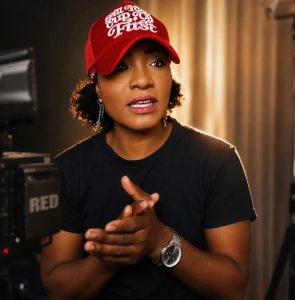
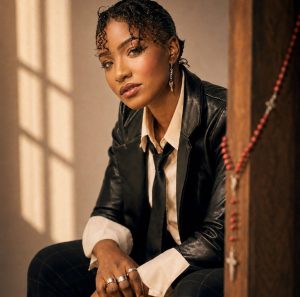
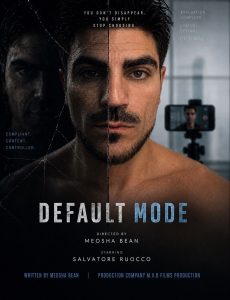
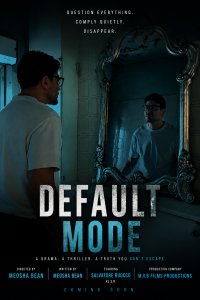
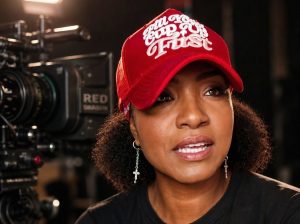
Filmmaker, writer, and director: these are just some of the professional facets of the multifaceted artist Meosha Bean. Passionate about writing and storytelling from a young age, Meosha Bean found in cinema her way of expressing herself and of bringing her stories – and the thought-provoking messages they convey – to others. Beyond the world of filmmaking, Meosha is also the creator of the acclaimed podcast “Chruch Hurt,” which is currently being crowdfunded in order to expand the project ahead of its second season. Meosha’s latest project is the psychological horror short film “Default Mode,” starring actor Salvatore Ruocco as a man isolated in a remote setting while undergoing a psychological evaluation for work-related reasons. In the short film, Salvatore’s character is forced to confront buried trauma, unconscious fears, and the darkest aspects of his identity and self-perception.
Sledet.com spoke with Meosha, who opened up about herself and told us more about this exciting project and much more.
Would you like to tell us how your passion for cinema began, and briefly walk us through the path that led you to become a writer and filmmaker?
When I was 16 years old, I went to the library with my mother one summer and rented the Alfred Hitchcock Presents series. I completely fell in love with the process of storytelling through cinema. I remember telling my mother, “This is what I want to do.” Hitchcock awakened something in me creatively, and from that moment on, I never turned back. Over the years, that passion evolved into writing, directing, producing, and creating stories that challenge audiences emotionally and psychologically. Filmmaking became more than a career for me. It became a calling and a way to communicate ideas, emotions, and truths about the world around us.
From your involvement in the acclaimed documentary Horror Noire: A History of Black Horror up to the present day, how has the way you see yourself as a storyteller evolved, and how has your approach to developing stories changed?
Being a part of Horror Noire: A History of Black Horror was an incredible honor and a defining moment in my career. To receive the call to contribute to something so historic and culturally important meant a great deal to me. The documentary continues to be shown in colleges and academic spaces, and it sparks meaningful conversations. To me, that is one of the most powerful purposes of filmmaking, to provoke thought and conversation. As a storyteller, I have become much more intentional over time. Earlier in my career, I was driven heavily by instinct and emotion. Now, I spend more time asking myself, “What am I truly trying to say with this piece?” Every visual, line of dialogue, and creative decision should serve the larger message and emotional core of the story.
When it comes to your view of contemporary cinema, do you think that a film truly worth noticing must necessarily deal with themes that encourage reflection and convey some kind of moral message, or do you believe cinema can remain detached from what is happening in the world?
I believe film reflects the times we live in. If we really pay attention to cinema and television, we can often see patterns in what society is experiencing collectively. Whether consciously or subconsciously, media is constantly communicating ideas to us. If we are not being sold something, we are often being told something. We are currently living in an age of overwhelming information and artificial intelligence, and that can be mentally exhausting because content is constantly being pushed toward us. Because of that, I do believe creators carry a certain level of responsibility. Art does not always have to be political or moralistic, but I think meaningful cinema should leave audiences feeling something, questioning something, or reflecting on something deeper than surface entertainment.
Which film genre do you feel allows you to express yourself best?
Psychological thrillers and horror films allow me to express myself the most creatively. Audiences enter horror expecting fear, tension, or discomfort, but what I love about the genre is that it can also communicate deeper truths about humanity, society, trauma, and identity. Horror is often one of the easiest ways to explore difficult subjects because viewers are emotionally engaged and open to interpretation. I enjoy creating stories that disturb people psychologically while also making them think long after the film ends.
Are there any directors you particularly admire and draw inspiration from?
I draw inspiration from many filmmakers and artists. Alfred Hitchcock had a massive impact on me early on because of the psychological tension and visual storytelling in his work. I also greatly admire Roger Deakins for his cinematography and mastery of atmosphere and composition, especially in films like Sicario. I also appreciate the work of Jordan Peele because of how he blends social commentary with horror and psychological storytelling in a fresh and culturally important way.
How did the idea for your latest short film, Default Mode, come about?
The idea for Default Mode began with a creative challenge I gave myself. I wanted to create a compelling story using one actor in one location. Once I established those limitations, the real question became, “How do I keep audiences emotionally and psychologically engaged?” From there, the concept naturally evolved. I became interested in themes surrounding routine, identity, control, and psychological conditioning. The challenge was creating tension and depth within a confined environment while still making the audience feel immersed in the character’s internal world.
A single location, limited resources, and therefore a fairly stripped down set, do you feel those constraints were an obstacle for the project, or rather an opportunity to make more inventive and creative choices?
Honestly, I viewed those limitations as opportunities rather than obstacles. That is part of the beauty of independent filmmaking. Your goal is to create an entire emotional and psychological world that audiences can live in for eight minutes alongside the character. For me, once I understand the theme and emotional foundation of a story, the ideas begin flowing naturally onto the page. Constraints can actually force filmmakers to become more creative because every choice matters more.
Following on from the previous question, what is your view of big productions and the constraints that the film industry often imposes in order for filmmakers to access major budgets?
I love large scale productions, but there is definitely a different level of responsibility that comes with them. On bigger productions, there are far more creative voices involved because studios and financiers are investing substantial amounts of money into the project. With independent filmmaking, there is often more creative freedom. On major productions, it becomes a balance between your artistic vision and the expectations of the people financing the film. There are more deadlines, more pressure, and more collaboration involved. It becomes a give and take process creatively.
From what we understand, the concept of the short revolves around reaching, perhaps unconsciously, a kind of automatic mental state. Do you think that, to some extent, all of us run the risk of slipping into a sort of default mode because of the frantic routine that modern society almost forces us to follow?
Absolutely. I think all of us are at risk of falling into that kind of “default mode.” We are constantly connected, constantly consuming information, and constantly being influenced by the world around us. As long as we remain plugged in all the time, we are being affected in some way psychologically, emotionally, or spiritually. That is why it is so important to unplug sometimes, reconnect with nature, reconnect with ourselves, and spend time experiencing things that feel real and grounded. Modern society moves very fast, and if we are not careful, we can lose our sense of individuality within that pace.
Speaking of modern society, with new streaming platforms constantly emerging, viewing habits changing, new formats developing, and the boom in artificial intelligence, the world of cinema and TV series is shifting quickly and radically. What is your position on these changes? What do you see as the positive and negative aspects?
I think these changes are both positive and negative. Life itself is built on balance, the yin and yang of existence. With growth and innovation also come challenges and consequences. Artificial intelligence, for example, is a powerful tool, and I believe it is here to stay. We live in a very fast paced world, and AI can help creators streamline certain processes and expand creative possibilities. At the same time, I think it is important that we use AI responsibly and do not lose the human soul of storytelling.Technology should support creativity, not replace human emotion, originality, and lived experience. That balance is extremely important moving forward.
How did your collaboration with Salvatore Ruocco begin, and what convinced you that he was the right choice for this project?
I have known Salvatore Ruocco for over ten years now. He has always been an incredibly talented actor and a wonderful friend. Over the years, I have watched him grow tremendously in his craft. We had talked for quite some time about creating something together, but our schedules never aligned until recently. Once we finally had the opportunity to collaborate on Default Mode, everything came together naturally. He delivered an outstanding performance and brought a great deal of emotional depth and authenticity to the character.
In a film so deeply focused on the psychological dimension, how important is the relationship of trust between director and actor? Do you feel you were able to build that kind of connection with Salvatore?
Trust between a director and actor is absolutely essential, especially in psychologically driven material. Fortunately, Salvatore is a very seasoned actor, so communication came naturally between us. I gave him direction and notes, but I also encouraged him to explore the role creatively and bring his own interpretation to the performance. We captured many different takes and emotional variations, which made the editing process exciting because he consistently delivered strong performances. As a director, you always appreciate actors who can take direction and elevate it beyond your expectations. Our long standing friendship and mutual trust definitely strengthened the collaboration.
What message would you most like to leave with viewers as they approach the film?
I want viewers to walk away understanding that they should never allow society or outside influences to completely control the way they think or live. Do not be afraid to take the unconventional path or create your own direction in life simply because it is not the most popular one. Stay curious. Stay independent in your thinking. Your journey is unique, and there is power in embracing your individuality rather than blindly following the expectations of the world around you.
Are you already working on any new projects?
I am currently working on Season 2 of my audio series Church Hurt. Season 1 was picked up by Spotify and is available on major streaming platforms. The series focuses on people who have experienced abuse within religious institutions, whether spiritual, emotional, psychological, or sexual abuse. These are real stories from brave individuals sharing how they found healing and freedom from those experiences. We are currently raising funds through GoFundMe to expand the project onto larger platforms because I believe these stories are incredibly important and necessary.
Who is Meosha outside of her work?
Outside of filmmaking, Meosha is a daughter, a sister, a friend, and someone deeply passionate about personal growth, knowledge, and understanding life on a deeper level. I truly enjoy experiencing life fully, connecting with people, learning continuously, and remaining open to growth both creatively and spiritually. For me, storytelling is only one part of who I am. Curiosity, compassion, and the pursuit of understanding are equally important parts of my journey.