
“I try to stay away from the usual villain roles, partly because they’re starting to bore me by now. It’s time to do something else”
Interview by Desirè Sara Serventi
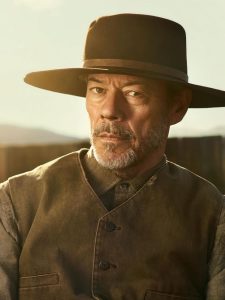
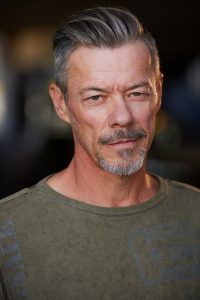
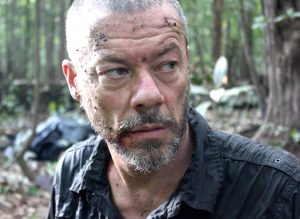
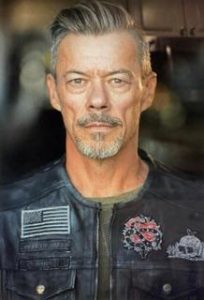
Massi Furlan is one of those actors who has built his own path through consistency, talent, and great dedication. His career, developed entirely in the United States, spans high-profile productions such as The Dark Knight Rises, Wrong Turn with Bruce Willis, Jumanji: The Next Level, and the television series Supernatural, to name just a few. In each of them, he has demonstrated remarkable versatility and a strong, credible, never predictable screen presence. Sledet.com spoke with Massi Furlan, who opened up candidly, revealing the portrait of a well-rounded artist: someone capable of tackling dramatic and complex themes, such as human trafficking in Trafficked, and of taking on physically and psychologically demanding roles. But beyond his technique, what stands out is his humanity: his passion for his work, his love for the craft, the irony with which he views the contradictions of the industry, and his constant desire to seek something new, original, and real. Because Massi Furlan is not simply a good actor. He is an artist who has made acting a life choice, and who continues to pursue it with intelligence, sensitivity, and courage.
From the military to Hollywood cinema. When did you realize that acting could become your path?
I would say when I was a child, when my flawless performances with my mother, on mornings when I did not want to go to school, worked wonderfully. Jokes aside, I have always enjoyed entertaining my friends since I was young, and I started out as an impressionist.
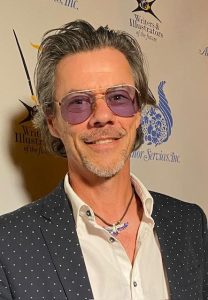
Was there a specific moment, at the beginning of your career, when you thought: this is what I want to do?
After I did The Dark Knight Rises.
Which characters represented a real challenge for you, ones that pushed you to confront aspects of the craft that you did not think you would be able to handle?
I would say two in particular. One was the role in the film Trafficked, with Ashley Judd, because its subject was human trafficking, a very sad and dramatic phenomenon that, in some way, casts a shadow over our world. The other difficult character was the one in the film Wrong Place, with Bruce Willis, for two reasons. The first was discovering that Bruce was not well at all and that he was not fully aware of being on set, which affected and saddened me greatly. The second reason was that it was my first role as an American, with a Southern U.S. accent, something I had never done before.
Playing characters immersed in war, crime, or situations of high tension requires both physical and mental preparation. How do you work to truly get into the character and make him believable?
First of all, I try to fully understand the story and the various situations the character finds himself in. Then I try to immerse myself completely in that world, putting Massi aside and focusing on the character, on his purposes, his goals, and the motivations that drive him to act in a particular way.
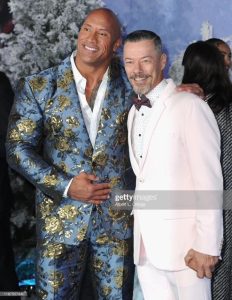
In Jumanji: The Next Level, you come face to face with the character played by Dwayne Johnson. How does an actor’s work change when physicality, action, and spectacle become integral parts of the narrative?
Well, I would say that being physically fit is very important when dealing with scenes that require stunts, even though, for the most significant and dangerous ones, we have our stunt doubles. In my case, since I have never had to perform particularly dangerous stunts, I personally did almost all of the action scenes.
In a context so dominated by action, how much room is left for psychological exploration of the character?
I would say it is a balance between staying in character, focusing on his goals, and at the same time remaining focused on the action and on what the scene requires.
When you think back on all the sets you have worked on, is there one where you felt you could be truly free in your performance?
Most of them, because so far I have been given a great deal of freedom by the various directors. Every time I work on a project, I always try to bring my own interpretation of the character. Then, if the director wants to try his own version, I adapt and do what is required.
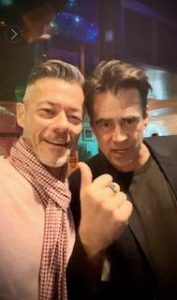
You have worked both in Italy and in the United States. What differences have you noticed in the way work on set is conceived of and experienced, also considering the language and the different scale of the productions?
Well, let’s set the record straight. I have never really worked in Italy, apart from a small film shot in Ischia that I do not even know was ever released. Italy remains somewhat of a taboo for me, because the way things work in Italy, in my field, is very sad.
What do you mean by that?
I mean that, after so many years of working in the United States, seeing certain dynamics in Italy is even harder to accept. In Italy, I have had several agencies, some of them quite prominent, and you get two, maybe three auditions a year. Here, on the other hand, you usually get five or six a month. We must remember that being an actor means receiving a high percentage of negative responses, so the ratio between auditions and jobs secured is not very high. Try to imagine what those odds might be when you only do three auditions a year. Then, after a while, these agencies do not even reply to your emails anymore. They disappear completely. I know very well that hiring an actor who lives in America to work in Italy can be difficult, but if they hire foreign girls to be showgirls who speak broken Italian and then they become famous actresses, why not hire an Italian actor who has been working in Hollywood for 20 years?
What do you consider the most significant role of your career?
It is difficult to mention just one, but I will try. I would say Father Luca Camilleri in the television series Supernatural.
After so many years of work, has your way of choosing a role changed?
I do not choose roles; I audition for the ones I am offered and, sometimes, I receive direct offers. In any case, I try to stay away from the usual villain roles, partly because they are starting to bore me by now. I have played the bad guy 103 times out of 114. It is time to do something else. Maybe a comedy!
What do you look for in a project today that you might not have looked for in the past?
Originality. By now, they make practically nothing but sequels, and they have really become boring. I would like to find projects with new ideas, original stories, and characters that have something different to say.
Is there something that a role must necessarily offer you for you to feel that it is worth accepting?
I like roles that have a certain range to them and allow me to show my versatility.
If you could go back to the beginning of your career and meet the Massi of that time, what would you tell him before he left for the United States?
Learn the language well and try to learn the American accent, otherwise it will be tough!
Based on your experience, what advice would you give to a young actor who would like to move to America to work?
Learn English well, because otherwise the opportunities and roles you can access are very limited.
Away from the set, far from the characters and the work, who is Massi?
Massi is a dog lover and someone who loves playing pranks on anyone, at any time. Then Massi is also half a pickleball champion, a sport that is gaining popularity in Italy as well. After three and a half years of tournaments, I have reached 70 medals, and in two weeks I am going for number 71. When I get to 100, I will retire.
At this point in your life and career, what is exciting you the most?
The fact that tomorrow will be another day and we do not know what it will bring us. I am excited by the idea of continuing to dream and to have new experiences, without yet knowing where they will take me.
What are you currently working on?
I have just completed a small project with the famous YouTuber MrBeast, as well as a series for Apple TV+ titled Paradise. I am also preparing two films to be shot at the beginning of 2027: one in Tanzania and one in Bulgaria.
Are there any projects you can already tell us something about?
I am planning to make 10 films in 10 different parts of the world. For now, I am at three, so I still have seven to go. Who knows, maybe one of them will be in Italy as well.
Is there a question you are never asked but would like to answer?
What do you want to be when you grow up?
Sledet.com thanks Massi Furlan for the interview, and ad maiora!