
“I work as a stunt coordinator and actor, and I run a company that provides training for the film industry, preparing actors and stunt performers to portray military roles in a credible way”
Interview by Desirè Sara Serventi
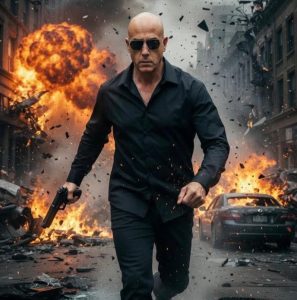
From the discipline of the 9th Assault Parachute Regiment “Col Moschin” to the world of cinema and stunts, Alessandro Folchitto recounts an uncommon journey, marked by sacrifice, resilience, and constant personal growth. Today he lives in Atlanta, where he works as an actor, stuntman, and military stunt coordinator, bringing to his projects the experience, character, and solidity of an extreme past transformed into a new professional identity. Sledet.com spoke with Alessandro Folchitto, who shared his story.
When did your passion for the military world begin?
My passion comes from my family history. My grandfather was part of the army. He had fought, and his uniform is still on display in Turin today, as that of an officer who fell during the war in Africa. The army has always been part of my life. My parents, on the other hand, worked in completely different fields and were not part of the military world.
Did your early years begin in basketball?
Yes, my first path was in sports. I played basketball up to Serie B1. It was an experience that shaped me greatly, both on a personal level and in terms of discipline.
How did the transition from sports to the military world happen?
There was a precise moment that marked the turning point. One day I saw on television an operation by the British Special Forces at an embassy. They went in, freed the hostages, and eliminated the terrorists. At that moment I realized that, no matter how hard I worked in basketball, I was simply throwing a ball into a hoop, while there were people doing something concretely useful for the community.
So what did you do?
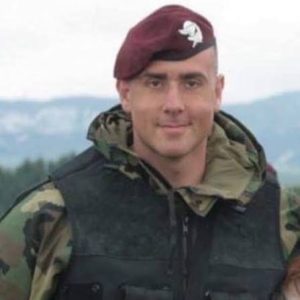
As often happens with me, I made an immediate decision. I applied to enter the Accademia Marescialli dell’Esercito. I ranked among the top in my class, in a program that, for the first time, also made it possible to earn a university degree. I chose that path with a precise goal: to enter the Special Forces, fully aware that it was not a direct entry, but a path to be built step by step.
Was that what you did?
Yes. After the corso marescialli I was not assigned to the paratroopers, but to the Alpini, to the 7th Reggimento Alpini in Feltre. I accepted that assignment and continued to look for a way into the Special Forces, even though at that time there were no selection competitions available. I then decided to take part in the competition to become an officer: I passed it and became an officer in the Alpini.
Then did you enter the Special Forces?
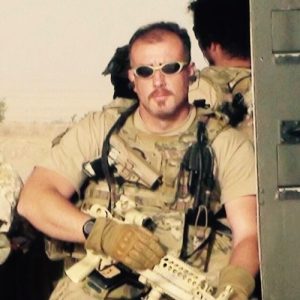
No, the process was not immediate. I was assigned to Monte Cervino, among the Rangers, where I went through the entire process. However, my goal remained Col Moschin. To become a raider of the 9th Reggimento d’Assalto Paracadutisti Col Moschin, it is necessary to pass an extremely rigorous selection and training process. In the end I succeeded: I entered the Special Forces, went through more than three years of training, and became a raider. I served for several years, up to the rank of captain, taking part in missions abroad and receiving several recognitions.
Your path was not an easy one?
Absolutely not. I changed several units and faced extremely demanding physical trials: from the Alpini to Monte Cervino, all the way to the 9th Regiment. Few people have completed both the Ranger course and the raider course.
What was your relationship with fear?
I have always thought that the only way to have courage is to feel fear. If fear does not exist, then courage cannot exist either. It is a fundamental element: on the one hand, it prevents you from making reckless choices; on the other, it can paralyze you. That is exactly why it must be faced.
Have you ever been afraid?
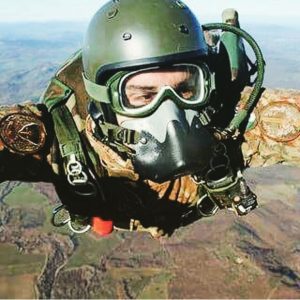
Of course. If I said no, I would be lying. I think of my first high-altitude jump. After many static-line jumps, the moment came for the 5000 meter jump. I was the first at the helicopter door and, because of an unexpected problem, we were forced to fly over the area for about fifteen minutes before getting the go-ahead. I remained at the door that entire time, looking down at the cars, the people, everyday life. In those moments the mind races. I thought, “What am I doing?” It was one of the few times when I truly believed I would not make it. Then the green light came on, something clicked inside me, and I jumped.
What did you do when you touched the ground?
Once I was on the ground, I said to myself: now I want to do another one.
Was fear a constant?
Yes. Even when I had a parachute malfunction in Spain, as soon as I landed I said I had to do another jump right away, otherwise fear takes over. Fear is not eliminated; it is managed.
During missions, how important is trust in the team?
It is fundamental, especially in the Special Forces. Knowing that, when you enter a room, you have someone behind you ready to cover you is essential. Without trust, there is no team.
At a certain point, did you decide to leave the army?
During a mission in Afghanistan, my mother and my sister had moved to the United States, where they had opened a restaurant that was very successful from the very beginning. Among their customers there was a former member of the American Special Forces who worked in cinema. Speaking with them, he learned about my story. A short time later, I received an email. He wanted to sponsor me to work in the special effects sector. I accepted.
Was it a difficult decision?
When I returned from Afghanistan, I thought about it for a long time, then I moved to America. Soon afterward, however, he died and, within two months, I also lost my mother. I found myself without my two points of reference: one emotional and the other professional.
How did you react?
I started working as a dishwasher in the family restaurant. It was an extremely hard impact: going from being a Special Forces captain to that reality.
How did you get into cinema?
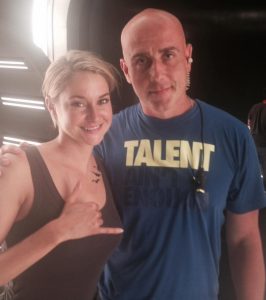
During an audition for Insurgent, from the Divergent series, they were looking for people with military skills. At a certain point, a very technical question was asked about how to carry out a scene, and no one knew how to answer. I raised my hand and showed exactly what to do, explaining it in detail. They asked me who I was, and I replied that I came from the 9th Reggimento Col Moschin. The coordinator then asked me some more specific questions, and it turned out that he knew one of my colleagues from the unit. He immediately called him to verify my words. After that confirmation, the military coordinator himself told me that I would replace him, because he was busy on another project with Brad Pitt. I was then introduced to the production team and, in a very short time, they entrusted me with that role. As a good raider, I tried to remain expressionless, but inside I was overwhelmed. That is how it all began: first the work behind the scenes, then my first experiences as a stunt performer, and later also as an actor.
What do you do today?
Today I work as a stunt coordinator, actor, and I run a company that provides training for cinema, preparing actors and stunt performers to portray military roles in a credible way. I have remained in contact with many colleagues from the Special Forces and I continue to move in a paramilitary environment, although in a completely different context.
What does your job consist of?
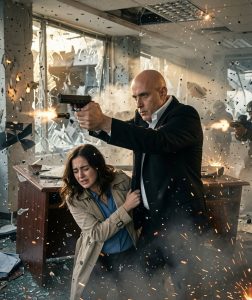
My job consists of making scenes realistic: it is not about turning actors into soldiers, but about teaching them to be credible. In the end, it is a choreography made up of movements, timing, and reactions that must work in front of the camera.
What must a stunt coordinator have?
For me, a stunt coordinator must first and foremost be a good stunt performer, someone who truly knows the profession. But above all, they must have one clear principle: safety comes before everything. You cannot die for a film. You can risk your life to save someone, but not to shoot a scene. There is no heroism and no glory in that: it is only a pointless tragedy. Accidents can happen, of course, but forcing a scene or pushing beyond the limits in order to get a shot is a lack of respect for life.
What was the most difficult scene?
One of the most complex was in a film with John Travolta: I had to drive a high-speed boat that was meant to explode and, at the right moment, throw myself into the water. In situations like that, you cannot do everything on your own: you have to rely completely on the stunt coordinator, the team, and everyone involved. You need to be certain that every detail has been checked. In this job, trust is fundamental: when it is missing, everything becomes much more difficult.
Who is Alessandro off set?
A normal person. I work in the family restaurant together with my sister. It is a completely different reality, but it helps keep me grounded.
What advice would you like to give the people who will read your interview?
If you really want it, you can do it. That is the point. Of course, there are external factors: injuries, personal problems, unexpected situations that you cannot control. But, generally speaking, with willpower and determination you can go far. It is essential, however, to know yourself, understand your own limits, and work on them. And above all, you must not be afraid of change: it is precisely change that allows you to grow and move forward.